

Using big CDE models from different disciplines are automatically combined into a shared coordination model. This allows the team to start checking model compatibility and to quickly see where issues arise. Automated rules can be set up in big to detect clashes or structural deviations and the integrated issue function captures these points as model-based tasks and tracks them transparently. The result is a clear, end-to-end review and approval process that improves planning quality, makes risks visible at an early stage, and enhances collaboration among all stakeholders.
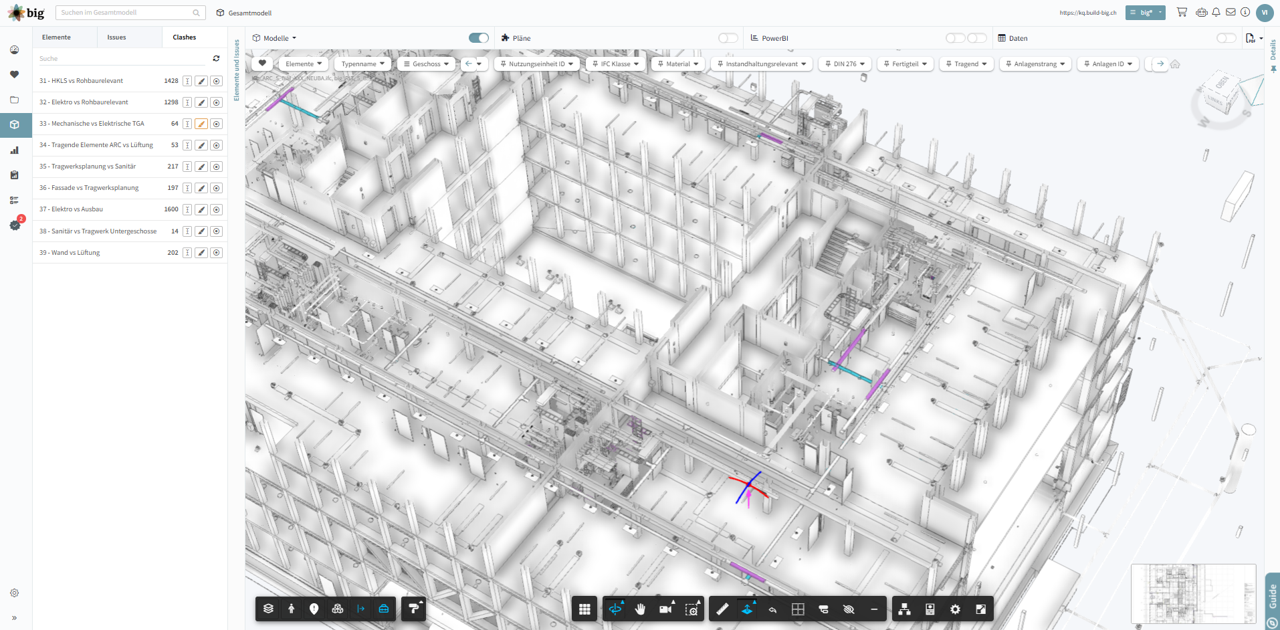
Systematic checking — not shotgun-style, with targeted model validation instead of a flood of collisions
Automated checking rules make it quick and reliable to identify clashes and conflicts — both between entire models and individual elements. Tolerances can be set flexibly, and targeted filters ensure the review remains focused and phase-appropriate. All detected deviations can be highlighted in the overall model and examined in context or individually, ensuring maximum transparency and full traceability.
From review to resolution — model-based and structured
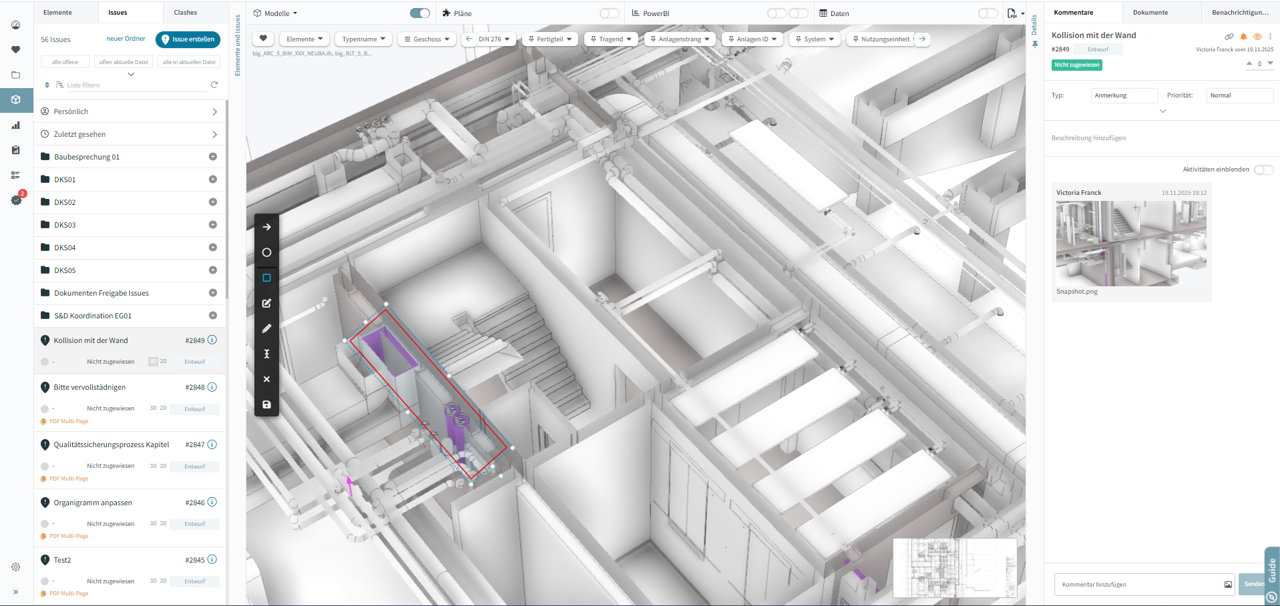
All detected issues can be recorded directly as model-based tasks and managed in a structured way via the integrated issue management. By clustering clashes and assigning them to responsible roles, a transparent and efficient process is created that supports planning and enhances model and design quality.
Data validation for consistent and reliable models
During data validation, big analyzes all information at both type and instance levels, automatically detecting deviations or missing values. Exceptions are clearly highlighted, making inconsistencies immediately visible and easy to resolve. The result is significantly higher data quality, reliably supporting planning as well as downstream processes such as cost management, operations, or ESG reporting.
See also “Data and Information Mangement“