
Case Study: LUKS — Transforming Facility Management Through big + waveware® Integration
Overview
The Luzerner Kantonsspital (LUKS) is one of Switzerland’s largest and most advanced hospital networks. Managing a complex portfolio of buildings, technical assets, maintenance processes, and compliance requirements demands a digital ecosystem that is both reliable and future‑proof.
To achieve this, LUKS implemented a combined solution using big (Building Information Grid) and the waveware® FM Tool, connected through a bidirectional API. The result is a seamless flow of building, asset, and maintenance data across platforms — eliminating duplication, improving accuracy, and enabling smarter decision‑making.
The Challenge
LUKS needed a way to:
- Consolidate building and asset data from multiple sources
- Maintain a single source of truth across departments
- Reduce manual data entry and the risk of inconsistencies
- Improve the speed and reliability of maintenance workflows
- Ensure long‑term scalability for future digital initiatives
Traditional FM systems often operate in isolation, creating data silos. LUKS wanted the opposite: a connected, interoperable environment where information flows freely and automatically.

The Solution: big + waveware® with a Bidirectional API
As a result, the integration between big and waveware® FM Tool creates a unified digital backbone for facility management at LUKS.
How the Integration Works
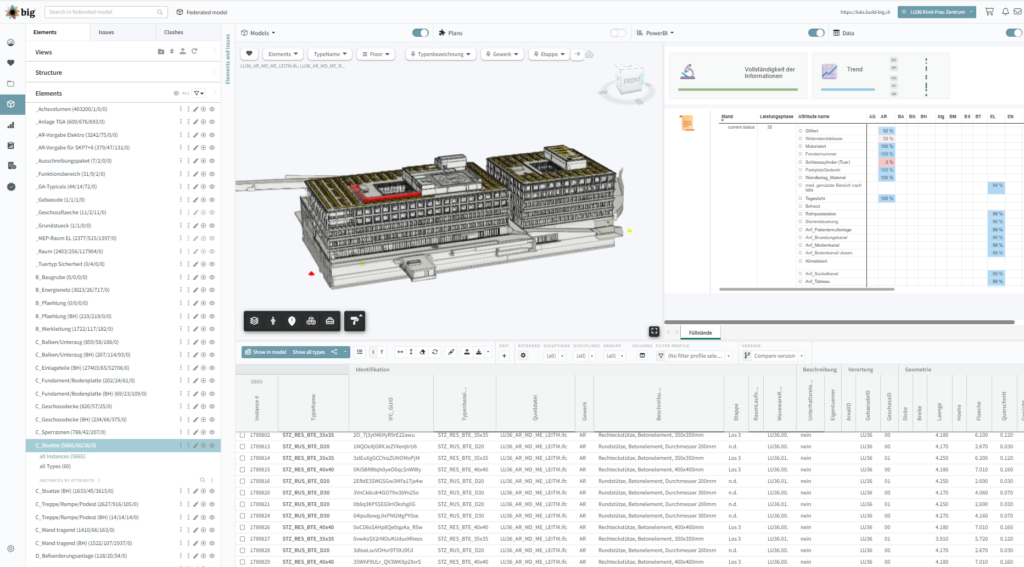
- big serves as the central data repository for models that detail buildings, rooms, assets, and technical systems.
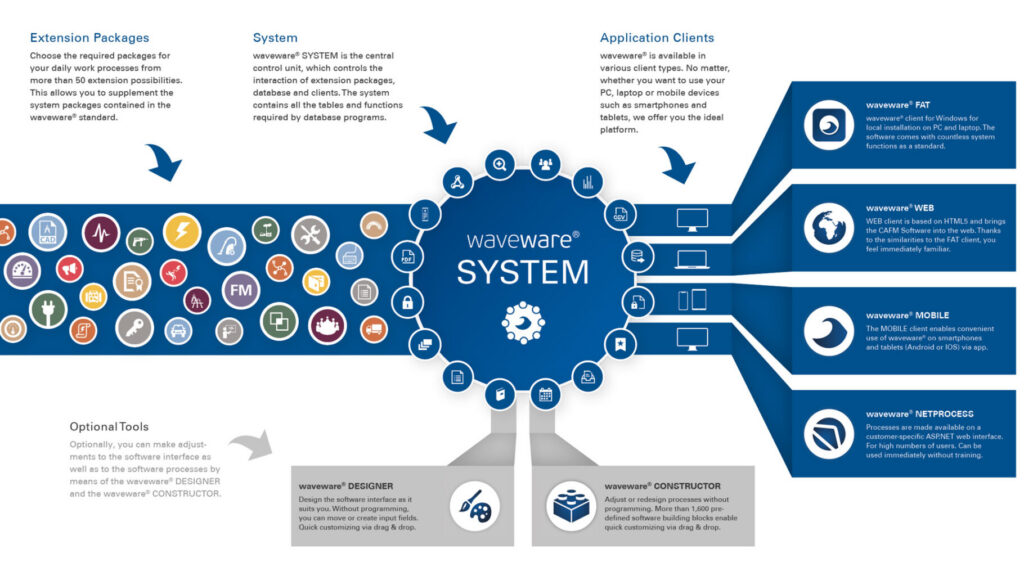
- waveware® manages operational FM processes such as maintenance, inspections, and service requests.
- A bidirectional API synchronizes data between the two systems in real time.
Why big Makes the Difference
big is more than a database — it’s a structured, intelligent, and highly scalable building information model designed for long‑term facility management.
Here are the key benefits LUKS gains from using big:
1. A Single Source of Truth: big combined with waveware® operate together to provide a clear definition of data ownership. The ecosystem of both platforms combined consolidates all building and asset information into one consistent, validated structure.
2. Seamless Interoperability: big is built for integration. Its open, well‑structured data model makes it easy to connect with FM tools, BIM platforms, IoT systems, and more.
3. Automated Data Synchronization: The bidirectional API ensures that any changes to Rooms, Asset updates, Maintenance updates and Status changes are reflected across both systems. This eliminates manual work and ensures operational teams always have the latest information.
4. Improved Maintenance Efficiency: With big feeding accurate asset and location data into waveware® work orders are more precise, technicians know exactly what they’re dealing with and maintenance cycles become more predictable. This leads to fewer delays and better resource planning.
5. Future‑Ready Data Structure: big’s graph‑based architecture supports: digital twins, advanced analytics, lifecycle planning and sustainability reporting. LUKS now has a foundation that will support digital transformation for years to come.
Conclusion
In conclusion, the LUKS case study demonstrates the power of combining big with the waveware® FM Tool through a bidirectional API. By unifying building information and operational processes, LUKS has created a streamlined, intelligent, and future‑proof facility management ecosystem.
This integration is a strong example of how modern FM organizations can leverage open data structures and interoperable platforms to achieve long‑term operational excellence.
For more information on Lifecycle Management click here