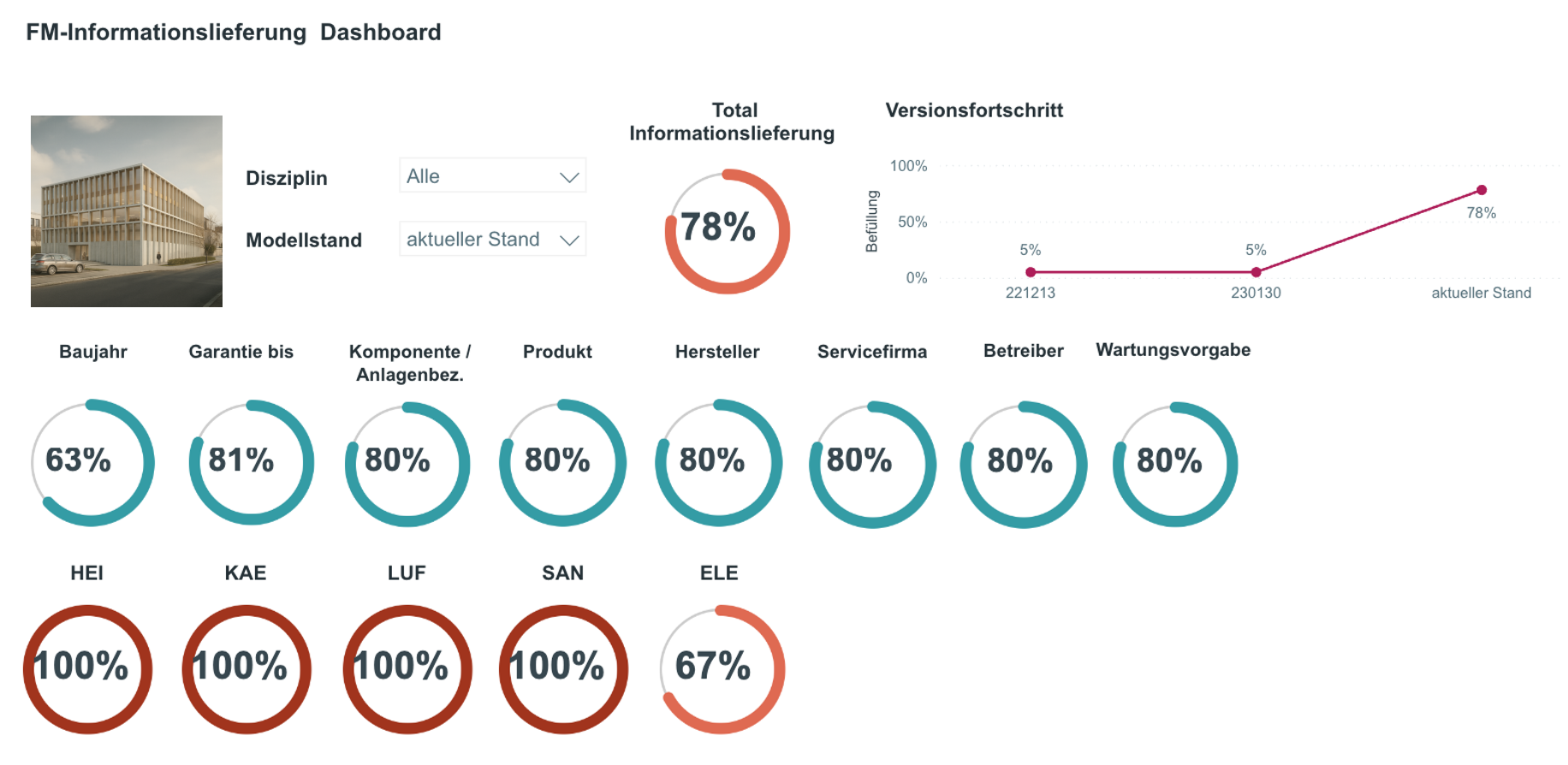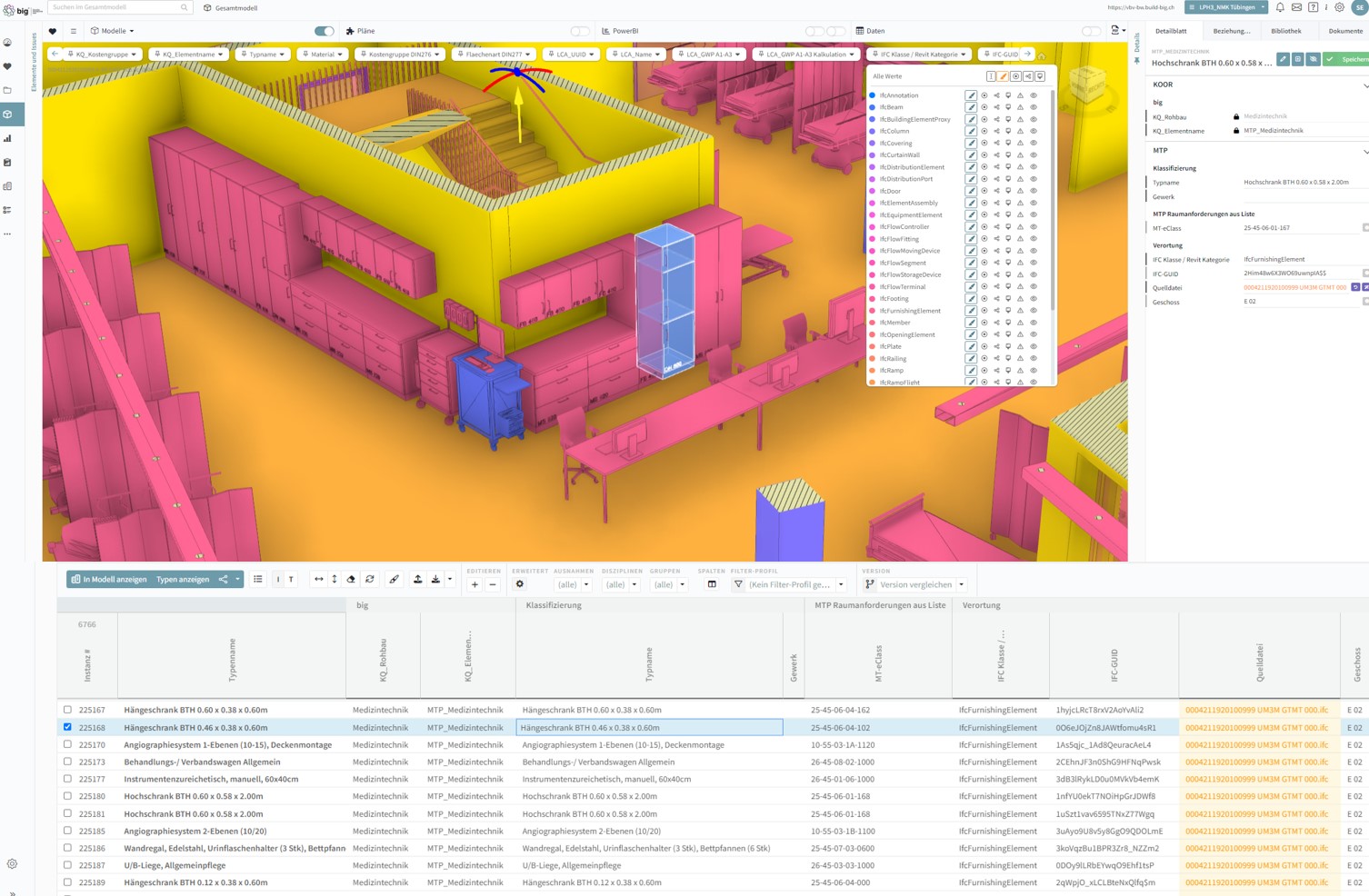

With big, project and portfolio data from various sources is structured, harmonized, and transformed into a consistent information landscape or central data repository. Scattered data is turned into a clear, traceable foundation for decision-making across all phases, from planning to construction to operation.
big connects information from models, documents, lists, interfaces, and third-party systems into a validated, unified data structure. Intelligent classifications, validations, and workflows automate quality assurance. Relationships become visible and information meaningful through visualizations such as dashboards, reports, and integrated models.
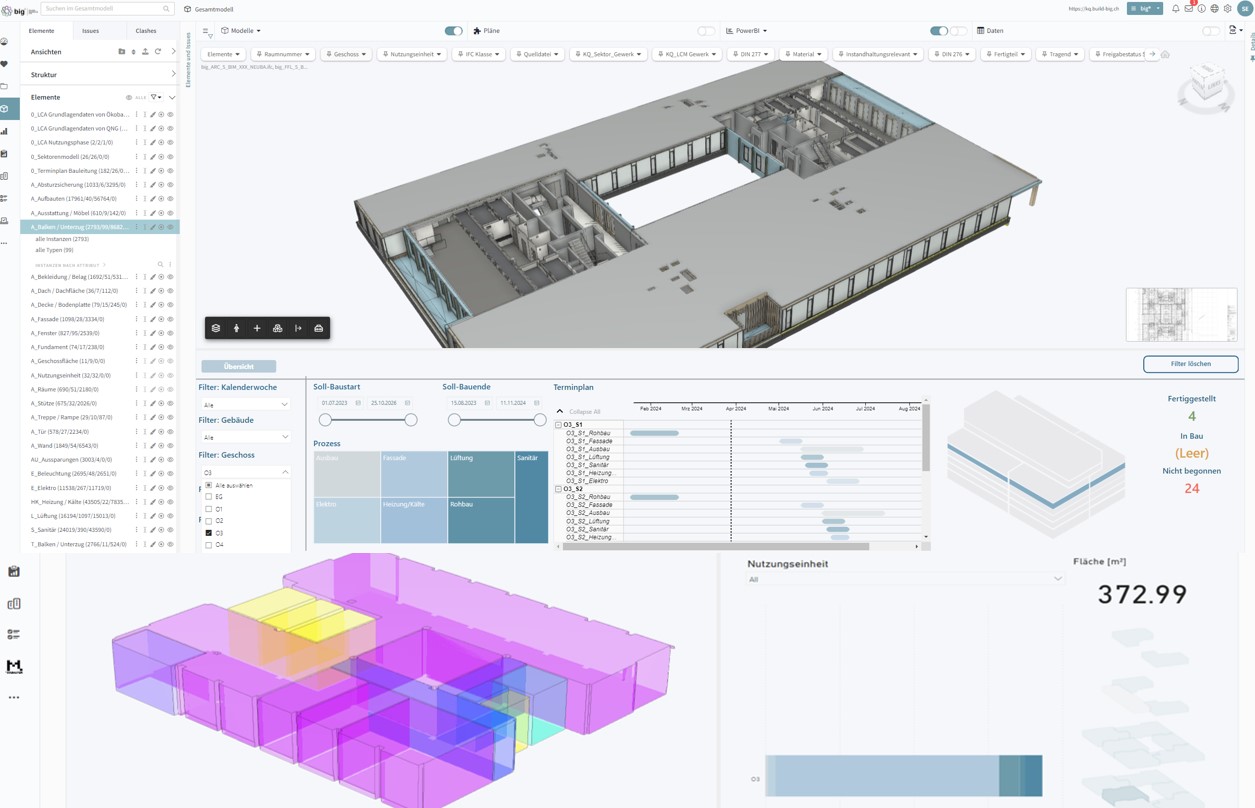
Transparency and Clarity in the Data Ecosystem for All Stakeholders
big transforms fragmented data sources into a central, trusted information foundation. This consistent data base helps reduce information gaps, manual duplication of work, and errors. By linking data and model content bidirectionally in big, qualities become visible, traceable, and assessable. This supports targeted, proactive problem-solving via integrated, model-based task management and increases visibility in project control.
big thus brings clarity and direction for the following questions:
Which information is complete? Where are the risks? Which areas require attention – and why? Which information flows are working – and where are they stalled?
Structured Information Management
For your project, big provides precise structuring and continuous quality assurance of all relevant information.
This is achieved through structured data collection, management, visualization, and validation on big.
Project teams can control this themselves. As a result, project teams can quickly identify where action is needed, how processes can be improved, and which information is required. They can take direct action. This allows teams to finally work with data, rather than searching for it.